
In business one of the first things that many people recommend is to create a business plan. A business plan is simply a plan of how you intend to accomplish your mission and or vision underlying the reason you started the company in the first place. If we think about this in terms of a family planning on taking a vacation, where they begin planning with an end destination in plan, we can make some key comparisons. The first thing we might do is to decide where we want to go, then we would decide on how we plan to get there, next we would decide on how much we are willing to pay to get to the destination, and finally, we would decide on what each person going on the journey is responsible for doing to prepare for the journey.

Once all of this was defined and all parties agreed, we could begin to set timeframes and targets that would allow us to know if we are getting closer to achieving our goal. Now let’s make some key comparisons.
Destination – In our vacation, it is where we want to end up. In business, it is where we want to take out company. Do we want to grow it and sell, keep it in the family, open multiple locations, etc. Depending on our final destination, we will make different choices of how to finance the growth and how to set up policies and procedures.
Route – In our vacation analogy, we would decide is we prefer to fly or drive, assuming that we choose to drive, we would then need to use a GPS system to give us directions. In business, we would do the exact same but instead of relying on a GPS system, we would need a detailed plan of how we should plan to move forward.
Financing – In the vacation, we might choose to save up and pay in cash, so that we do not have to worry about paying financing fees long after the fun of the vacation are over. In business, we might decide to do the same and bootstrap the business startup costs, then let the company growth be paid from operating profits. If, however, we are planning to grow quickly, we might prefer to use financing to accelerate the growth and allow us to grab market share quickly, thereby reaching our breakeven point as soon as possible.
Responsibilities – For the vacation, the dad might be responsible for preparing the vehicle and the mother responsible for packing the luggage. Both parties might be responsible for requesting time off from work and ensuring that the dates align with the kid’s school schedule. If we did not outline who is responsible for what, we might quickly realize that while we thought someone else would take care of the luggage, we arrive with nothing to wear. The same is true in business, if we do not outline who is responsible for what, we may quickly realize that nobody is paying attention to where we are going.

One of the things that our clients who enroll in the Business Mentor program we offer are most impressed with is how we create personalized dashboards, tailored to their specific needs. The same as a car has a dashboard to let the driver know that there is adequate gas and oil to reach the destination, or if either needs attention before we unknowingly run out and become stranded, our dashboards track key performance indicators that allow the owner to know if they are sufficiently prepared to reach their destination. Imaging thinking you are doing great because you keep getting new clients, only to realize that you have insufficient cash flow to meet your payroll or service dept payments and end up stranded or bankrupt.
The dashboards we create are not only for the owner, but we also create dashboards for managers to utilize as a guide and to track performance. In our Business Mentor program, we provide monthly operating financial statements that function similar to the rearview mirror, allowing the management team to see what occurred last month, we then provide dashboards that update to consider last month’s performance and recalculate targets for this month to keep us on track towards our destination.
Finally, we combine these powerful tools along with hands on operating systems and advice that allow the owners to switch gears if necessary. When using a GPS, it is a powerful tool that shows you a representation of the area, but it is not the actual area. This means that while you the driver should use the tool, you may have to make real time changes as you encounter things in the real world that the GPS has not registered. This is where having access to a real time mentor to ask questions and seek guidance become invaluable.
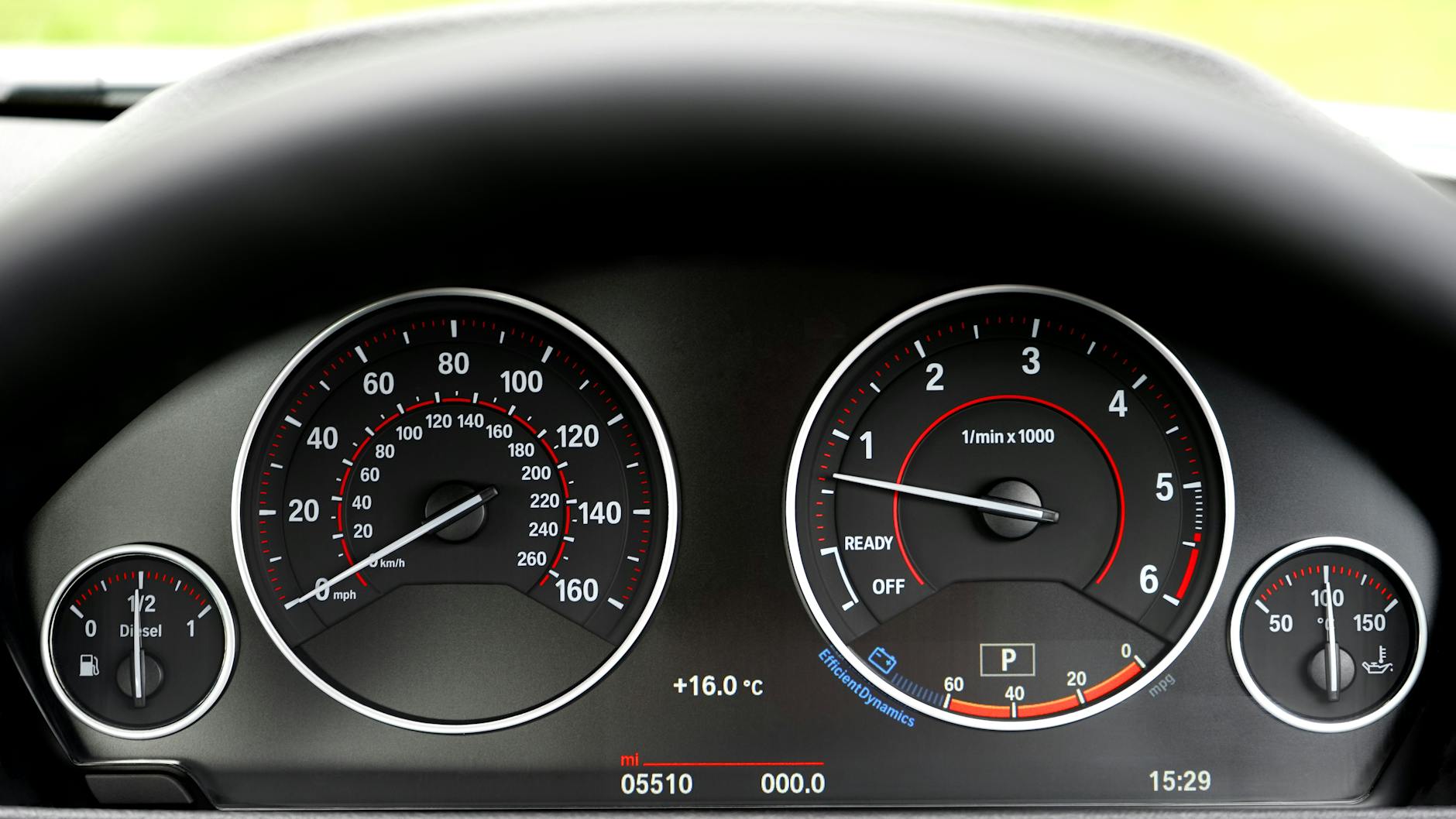
KPI stands for Key Performance Indicator. KPIs are used to evaluate success at reaching targets.
There are two main types of KPIs:
Lagging KPIs: These are outcome-based and measure the results of past actions (e.g., total sales, revenue, profit margins).
Leading KPIs: These predict future performance and help organizations understand trends before they happen (e.g., number of new leads, customer satisfaction scores, employee engagement levels).
Now let’s look at some of the more granular KPIs that many of our clients utilize to improve their performance.

1. Sales KPIs
- Total Revenue: Measures the total sales within a specific time frame (daily, weekly, monthly). This is vital to understand because almost all other numbers in the financial statements we provide are a derivative of sales. By knowing how sales are doing, owners are able to make the real time changes necessary to ensure that they do not become stranded without enough fuel to reach their destination.
- Average Check Size: The average amount spent per customer, including food, drinks, and any upsell items. We often refer to this as the average transaction value. Basically, if you take the total sales/revenue and divide it by the number of transactions over that same period (daily, monthly, yearly). This is valuable to know because it allows you to see trends in customer spending. There are only basically two ways to increase total sales, one is to increase the total number of transactions, or the second way is to increase the total among or the total amount of each transaction.
2. Customer Experience KPIs
- Customer Satisfaction (CSAT): Based on customer feedback, surveys, or reviews, this indicates how happy customers are with their experience. This is vital because any owner can increase their menu prices and see an instant spike in sales but if that uptick in sales comes at the cost of a decrease in customer satisfaction, you may soon see a decrease in total transactions.
- Wait Time: The average time customers wait to be seated or served, impacting customer satisfaction. For restaurants, this and table turns is a major metric that almost all owners are interested in. Just remember that you can train servers to speed up service in an effort to turn tables but if that causes a decrease in customer satisfaction, it may have a negative long-term effect. This is why having a comprehensive dashboard that tracks current and historical trends is vital.

3. Operational KPIs
- Food Cost Percentage: Measures how much of your total sales is spent on food costs. It’s calculated as (Food Cost / Total Revenue) x 100. This is important for the owner because food and labor are typically well over half of all costs associated with a food service establishment. This is typically a major part of the dashboards we create for management.
- Labor Cost Percentage: Measures labor costs as a percentage of sales. This helps ensure your staffing levels are efficient without overspending on wages. Once again this is a huge part of managing the profitability of a food service establishment. Our dashboards for management typically exclude salary costs because they are not able to influence them and there it is not fair to measure the manager’s performance base on them.
- Inventory Turnover: Measures how efficiently inventory is used and replenished. High turnover usually means better management and fewer waste issues. This is where having access to a real time mentor is valuable because they can assist with real time changes to influence the amount of inventory that is tied up on the shelves, and in doing so can dramatically increase cash flow from operations.
4. Marketing KPIs
- Customer Acquisition Cost (CAC): Measures how much it costs to acquire a new customer through marketing and promotions.
- Loyalty Program Participation: Tracks the percentage of repeat customers and how many join loyalty programs, which is a great indicator of customer retention.
- Social Media Engagement: Tracks how well your restaurant’s online presence is performing (likes, shares, comments, mentions).

5. Staff and Employee KPIs
- Staff Turnover Rate: Measures the percentage of employees who leave your restaurant over a specific period, which can indicate employee satisfaction or operational issues.
- Employee Productivity: Measures the average sales per employee, helping to assess how well your staff is performing. This is important for the front of house staff because it allows the owner and manager to determine peak times to schedule additional staff and to see which servers are upselling the most items, which would allow the manager to have new servers shadow these high performing servers.
6. Health & Safety KPIs
- Health & Safety Incident Rate: Tracks any incidents or violations of health regulations in your restaurant, which is essential for compliance and customer safety. When clients choose to enroll in the Business Mentor program, one of the big perks they receive is monthly food safety and sanitation audits. The results of these audits is used to create plans of correction but also added into the dashboards to allow managers to see trends in safety and sanitation issues related to specific day parts or staff members.

7. Profitability KPIs
- Gross Profit Margin: Measures the difference between revenue and the cost of goods sold (COGS), helping to determine how much profit you are making before operating expenses.
- EBITDA: Earnings before interest, taxes, depreciation, and amortization is a measure of operational profitability. We like to use this metric because it excludes the line items that are more closely related to financial accounting and typically used to lower overall profit in an effort to reduce the tax liability. It instead allows owners and managers to see overall performance related to items that they have some ability to influence.

Ready to get in the driver’s seat of your company?
This is brief overview of some of the data that is included in our dashboards and the reasons why. If you are struggling to understand why you seem to be busy but don’t seem to be making profits or would just like a system of how to track and manage costs, check out our Business Mentor program or just complete the form on our contact page and someone will be in contact with you.
Thanks,
RV
 Food Service Solutions